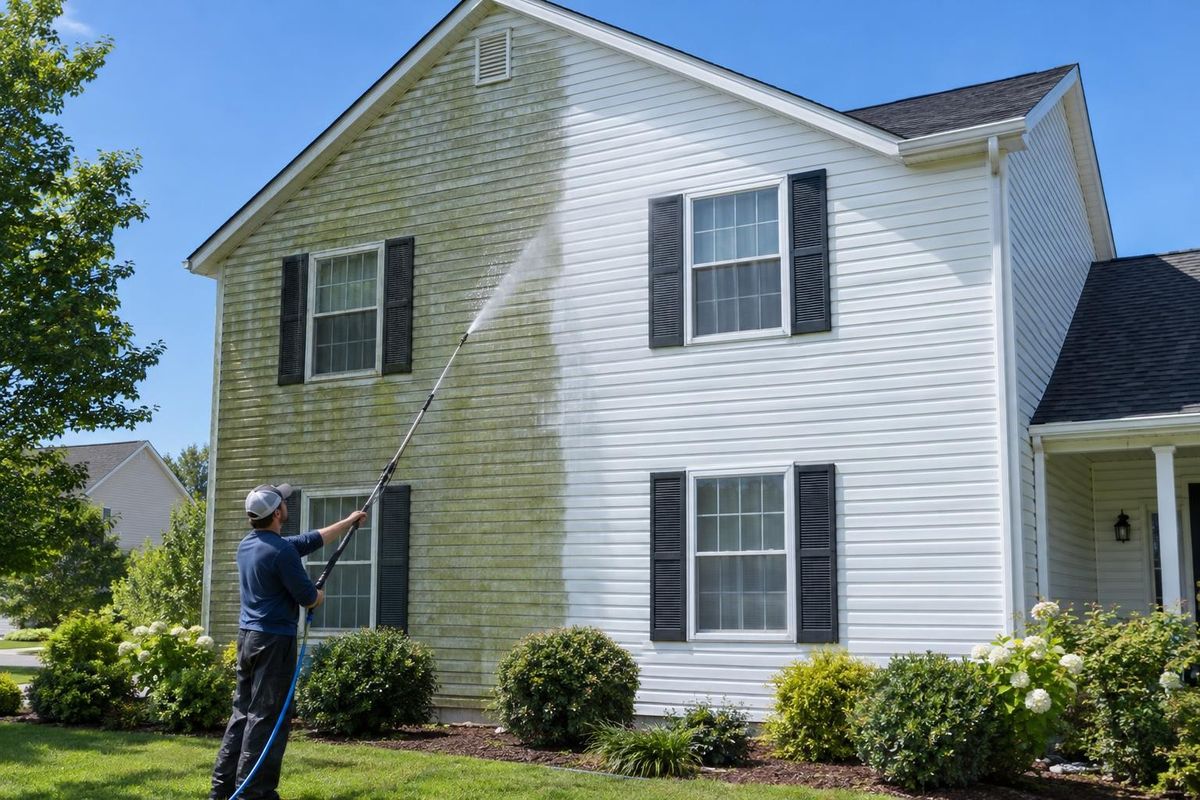
Key takeaways
- Pressure washing uses high pressure and suits hard surfaces like concrete.
- Soft washing uses low pressure plus cleaning solutions for siding and roofs.
- The wrong method can damage surfaces or leave algae behind.
- Many homes need a mix of both.
Pressure washing
Pressure washing uses high-pressure water to blast away dirt, oil and stains. It works well on concrete driveways, sidewalks, patios and brick when done with the right nozzle and surface cleaner.
Used on siding, wood or roofs, high pressure can gouge, force water behind surfaces or strip granules from shingles.
Soft washing
Soft washing uses low pressure and cleaning solutions that kill algae, mildew and moss at the root. The solution does the work and a gentle rinse carries the dirt away.
It is the preferred method for vinyl and stucco siding, painted surfaces and roofs, and the results last longer because growth is treated, not just rinsed.
How to choose
Use pressure for flat, hard surfaces and soft washing for anything delicate or covered in living growth. A good contractor will explain the plan for each surface.
In shady, damp areas of Middle Tennessee, algae returns quickly, so treating it matters more than blasting it.
What to expect
Plan for water access and keep windows closed. Plants are rinsed and protected. Many homeowners wash once every year or two.
Quick answers
Can I pressure wash my own house?
You can, but it is easy to damage siding or push water behind it. Soft washing is safer for most homes.
How long do results last?
It depends on shade and moisture. Many homes look good for a year or longer.